Shraadh
Shraadh
What is Shradh ? How Can we do it at Home ? Who can do Shradh ?
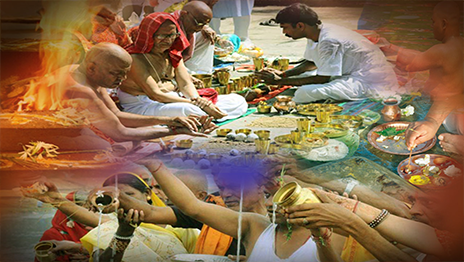
What is shraadh- Shraadh is remembering of ancestors. The idea is to remember the ancestors with gratitude. Shradh is a Sanskrit word, which literally means “anything done with sincerity and faith.” “Shraadh” also means “Shraddha” which means unconditional reverence. Shradh is performed every year on the death anniversary of the deceased relative as per the Panchang (The Hindu calendar) or during the period of dark fortnight called Pitra Paksha Shraadh.
Shardh dates 2026
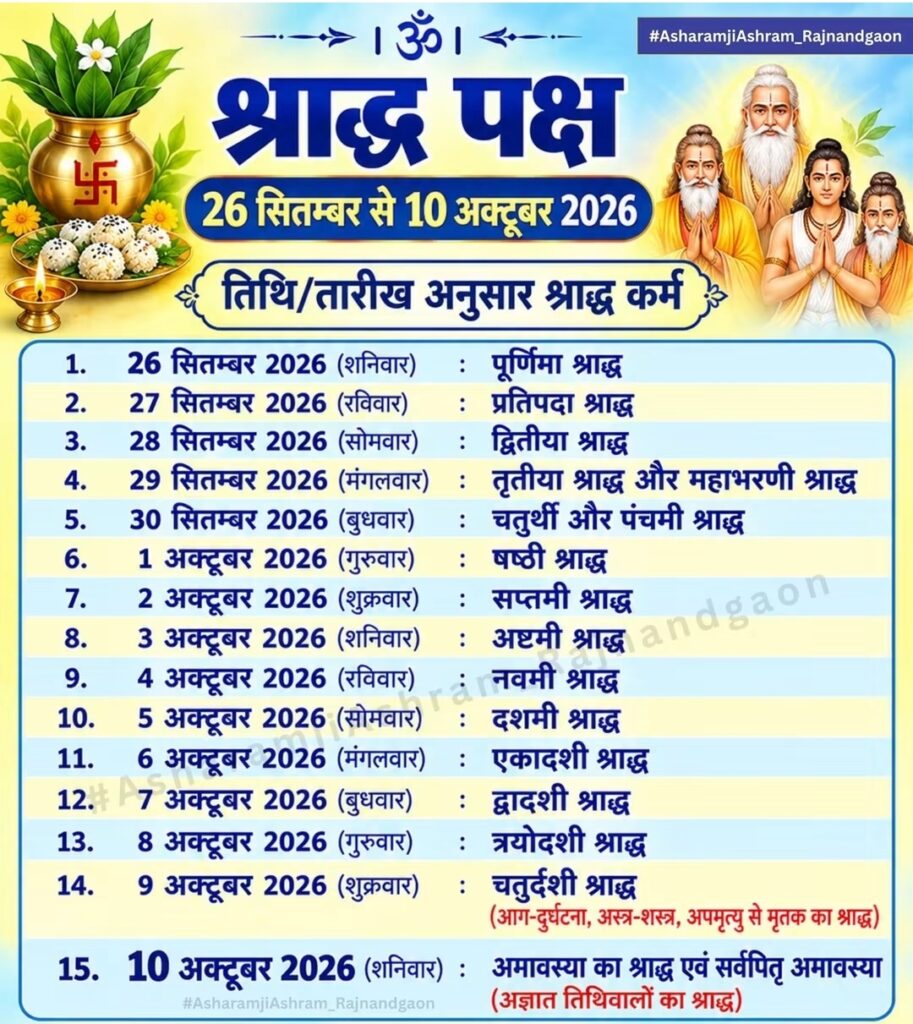
2026 Mahalaya Paksha Shraddha Or Pitru Paksha Shraddha: A Guide to Honoring Ancestors
Why is Mahalaya Paksha Important?
Hindus believe that performing Shraddha rituals during this period frees their ancestors from the cycle of rebirth and provides them with eternal peace. It is a time to express gratitude for the contributions of ancestors in shaping the present and future generations.
For many, Mahalaya Paksha also serves as a spiritual cleansing process, bringing peace to both the living and the dead.
2026 Mahalaya Paksha Shraddha Calendar OR Pitru Paksha Shraddha
Date Day Shradh tithi
September 27 Sunday Pratipada Shraddha
September 28 Monday Dwitiya Shraddha
September 29 Tuesday Tritiya/Chaturthi Shraddha
September 30 Wednesday Panchami Shraddha
October 1 Thursday Shashthi Shraddha
October 2 Friday Saptami Shraddha
October 3 Saturday Ashtami Shraddha
October 4 Sunday Navami Shraddha
October 5 Monday Dashami Shraddha
October 6 Tuesday Ekadashi Shraddha
October 7 Wednesday Dwadashi Shraddha
October 8 Thursday Trayodashi Shraddha
October 9 Friday Chaturdashi Shraddha
October 10 Saturday Sarva Pitru Amavasya.
How to Perform Shraddha Rituals
Performing Shraddha is a ritualistic process that requires dedication and sincerity. Here’s a step-by-step guide to performing Shraddha:
1. Prepare Offerings: The main offerings include rice, black sesame seeds, ghee, and water. These are placed on a banana leaf or silver plate.
2. Recite Prayers: A priest or family elder recites mantras and prayers specific to the ancestors.
3. Pind Daan: The offering of rice balls (Pinda) is crucial. These are offered to represent the souls of ancestors.
4. Serve Food to Brahmins: Food is offered to Brahmins or priests, symbolizing feeding the ancestors.
5. Donate to the Needy: Donations, known as “Daan,” are made to the needy and to cows, signifying the completion of the ritual.
Key Components of Shraddha Rituals
– Pind Daan: Offering of rice balls.
– Tarpan: Offering water mixed with black sesame seeds.
– Daan: Donating food, clothing, and money to the needy.
Mahalaya Paksha, or Pitru Paksha, is a time of reverence and respect for ancestors. In 2026, Above are the the dates for this sacred period begin on 26 september and conclude on 10 oct 2026 . Performing Shraddha rituals during this time is considered essential for ensuring peace and blessings from departed ancestors. By understanding the importance of each day and performing the rituals with sincerity, one can honor their ancestors and seek their blessings for the family’s well-being.
FAQs
1. What is the significance of Sarva Pitru Amavasya?
Sarva Pitru Amavasya is the most significant day of Pitru Paksha, where all ancestors are honored collectively.
2. What offerings are made during Shraddha rituals?
Rice, black sesame seeds, water, and ghee are the primary offerings made during
Shraddha.
3. Can Shraddha rituals be performed at home?
Yes, Shraddha rituals can be performed at home with the guidance of a priest.
4. Why is Mahalaya Paksha important?
It is believed that performing Shraddha during Mahalaya Paksha ensures peace for departed souls and brings blessings to the family.
5. Is there a specific time to perform Shraddha?
Shraddha is usually performed in the morning, during the Tithi (lunar day) specific to the ancestor’s death anniversary.
Rituals of Shraadh- Shradh karne ki Vidhi
who can do Shraadh ?-The rituals of Shradh are generally performed by an eldest son or an eldest male member of the family.
While performing Shradh, one should pay special attention to three things – piety, control over anger and avoiding hastiness. Meditation, mantra repetition and prayer are done for the peace and attainment of salvation by departed soul.
Difficulties one May face –if Shradh is not performed
As per classics if Shradh is performed with whole devotion, the ancestors bless the native with comforts of life. It is imperative for person to perform Shradh to safeguard oneself and preceding generations from Pitr Dosha. If Pitra dosha is present in chart native himself and his family members may encounter various problems like-Inability to get married, Marital concerns, infertility, problems in begetting child, loss of Job and finances, critical health concerns etc.
How to perform Shradh At home-:
The days of ancestors have started. During this time people perform Shradh and remember their ancestors. There is a Vidhi to offer obeisance to ancestors and perform Shradh on a particular date. Shradh, Pind Daan and food are offered to Brahmins in the name of ancestors.
What is Tarpan? How To Do Tarpan? Tarpan keise karein ?
It is everyone’s duty to satisfy their ancestors. During this, water mixed with black sesame(Til) is offered to the deities and sages and ancestors because water and sesame are considered sacred. This is called tarpan. After this, there is a law to provide Pind Daan and food to Brahmins and Dakshina is also given to them. Tarpan, Pind Daan and offering food to Brahmins is called Shradh. Shradh is performed on the banks of holy rivers. If this is not possible, then it can be done in your home or even in a cowshed.
how to do shradh
1. If you want to perform Shradh at home, then wake up before sunrise and take a bath.
2. You have to get ready by wearing clean clothes. After this, a resolution of Shradh and charity is taken for the fulfillment of the ancestors. You don’t have to eat anything till the time of Shradh.
3. Shradh is performed in the eighth Muhurta of the day, it is called Qutup Kaal. Which is from 11.36 to 12.24 in the morning.
4. Keep your face in the south direction on the seat, bend the left leg and sit down with the knee resting on the ground.
5. Take a wide copper vessel, put sesame seeds, raw milk of cow, rice, Gangadal, white flowers and water in it. Use only white flowers in Shradh.
6. You keep Kusha in your hand, take water on it, drop it in the same vessel. Do this 11 times while remembering your ancestors.
7. After this, offer some kheer in the fire to the ancestors in the havan. Separate food is taken out for Panchbali i.e. deity, cow, dog, crow and ant.
8. Brahmins are fed food and then according to the reverence, donation of dakshina and clothes etc. is done.
Keep a few things in mind –
It is believed that the world of ancestors is in the south direction. For this reason, while performing Shradh, one is seated facing the south direction. Shradh should be done in the afternoon.
In Tarpan, the ancestors have to be satisfied with milk, sesame seeds, kusha, flowers and water. According to the scriptures, the thirst of ancestors is quenched by offering water, water is life, otherwise the ancestors remain thirsty. If a person does not collect the necessary things during the days of Shradh, then he should definitely do tarpan with water, sesame and rice.
Who can do Shradh?-The eldest son performs the Shradh of his own father. If there is no son, the wife performs Shradh. Even if there is no wife, then the real brother can also perform Shradh. In the end, Brahmins are fed food. By donating Pind, ancestors get food. By donating clothes, clothes reach the ancestors. There is such a law that it is right to offer tarpan to ancestors on every full moon and new moon.
Let’s know what the each day of Shradh signifies-:
- Purnima Shradh: On this day, Shraddh is performed for those who left this world on the Full Moon day (Purnima).
- Pratipada Shradh: This is performed for the members of the family who died on Pratipada Tithi.
- Dwitiya Shradh: Also known as Dooj Shradh, this is performed for the members who died on Dwitiya Tithi.
- Tritiya Shradh: This is performed for the people who have died on Tritiya Tithi. It is also known as Teej Shraddha.
- Chautha Shradh: This is followed for the persons who have died the previous year or on the Chaturthi Tithi.
- Bharani Shradh/Panchami, Shradh death on panchami tithi: This Shraddha is performed when the Bharani Nakshatra prevails during Pitru Paksha. Bharani constellation either prevails on Chaturthi or Panchami every year. Shraddh performed on this day is equivalent to the Gaya Shraddha. Panchami Shraadh is special in its own way because on this day, Shradh of the people who died unmarried is performed.
- Shashthi Shradh: This is known as Chhath Shraddha performed for members who died on Shashthi Tithi.
- Saptami Shradh: This is performed for the family members who died on Saptami Tithi.
- Ashtami Shradh: This is done for the members who have died on Ashtami Tithi.
- Navami Shradh: It is known as Avidhava Shraddh. This is performed by the men whose wives have died. Also, this is known as Matra Navami, as the Shraadh of mother is also performed on this day.
- Dashami Shradh: Dashami Shraddha or Dasami Shradh is done for people who have died on Dashami Tithi.
- Ekadashi Shradh: This is also known as Gyaras Shraddh, performed for people who have died on Ekadasi Tithi.
- Dwadashi Shradh: This is performed for people who have taken up Sanyas or renunciation before death or who died on Dwadashi Tithi. It is also known as Baras Shradha.
- Magha Trayodashi Shradh: This is performed for dead children or the people who died on Trayodashi Tithi. It is also known as Kakbali, Balabholani Teras or Teras Shraadh. Magha Shraddh is performed when Magha Nakshatra (constellation) prevails during Aparahana Kaal.
- Ghata Chaturdashi Shradh: This Shradh is followed for the persons who have died unnaturally (accident, murder or suicide). It is also known as Chaudas Shraddh.
- Sarvapitri Amavasya Shradh: This Tithi is performed for all ancestors, irrespective of the way they died. If somebody is not able to perform Shraadh on the requisite Tithi, may perform on Sarvapitri Moksha Amavasya Shraddha. It is also known as Amavas Shraddha.
- death on amavasya day, death on amavasya tithi- If a family dies on Amavasya, it can be done on Shraddha Amavasya Tithi. It is also called Sarvapitri Moksha Amavasya Shraddha. On the same day, if the date of death of a family is not known, then Sarvapitri Moksha Amavasya Shraddha is performed. The worship performed on the day of Shradd is called shradh pooja
- gaya shradh vidhi in hindi- “सनातन काल से ‘श्राद्ध’ की परंपरा चली आ रही है। हिन्दू धर्म के अनुसार हर मनुष्य पर देव ऋण, गुरु ऋण और पितृ (माता-पिता) ऋण होते हैं। पितृण से मुक्ति उसी समय मिलती है, जब माता-पिता के मरणोपरांत पितृपक्ष में उनके लिए विधिवत् श्राद्ध किया जाए।
आश्विन कृष्ण पक्ष प्रतिपदा से आश्विन महीने के अमावस्या तक को ‘पितृपक्ष’ या ‘महालया पक्ष’ कहा गया है। पितृपक्ष में मोक्षधाम गयाजी आकर पिंडदान एवं तर्पण किया जाता है। ऐसा करने से पितरों को मोक्ष की प्राप्ति होती है। तर्पण व पिंड दान करने वाले का और उसके माता-पिता समेत 7 पीढ़ियों का उद्धार होता है। गयाजी को विष्णु नगर के नाम से जाना जाता है। यहां की भूमि को मोक्ष भूमि कहा जाता है। gaya shradh गयाजी में पिंडदान करने से पूर्वजों को मोक्ष मिल जाता है और वे स्वर्ग चले जाते हैं। इसे ‘पितृ तीर्थ’ भी कहा जाता है।
वायुपुराण में फल्गु नदी की महत्ता का वर्णन करते हुए फल्गु तीर्थ कहा गया है। इसे गंगाजी से भी ज्यादा पवित्र माना गया है। फल्गु नदी के तट पर पिंडदान एवं तर्पण करने से पितरों को उत्तम मोक्ष मिलता है। हिन्दुस्तान में श्राद्घ के लिए 55 स्थानों को महत्वपूर्ण माना गया है, इनमें से बिहार के गया का स्थान सबसे ऊपर है।विष्णुपुराण के अनुसार सर्वप्रथम आदिकाल में भगवान श्रीराम ने फल्गु नदी में पिंडदान किया था। महाभारत के वनपर्व में भीष्म पितामह और पांडवों द्वारा भी पिंडदान किया गया था। Astrologer bhrigupanditपिंड क्या होता है?- किसी वस्तु के गोलाकर रूप को पिंड कहा जाता है। प्रतीकात्मक रूप में शरीर को भी पिंड कहा जाता है। पिंडदान के समय मृतक की आत्मा को अर्पित करने के लिए जौं या चावल के आटे को गूंथकर बनाई गई गोलात्ति को पिंड कहते हैं।पिंडदान, तर्पण और ब्राह्माण भोज- श्राद्ध व तर्पण में मुख्य विधि के रूप में 3 कार्य करने होते हैं। वे हैं- पिंडदान, तर्पण और ब्राह्माण भोज। दक्षिणाविमुख होकर आचमन कर अपने जनेऊ को दाएं कंधे पर रखकर चावल, गाय के दूध, घी, शक्कर एवं शहद को मिलाकर बने पिंडों को श्रद्घा भाव के साथ अपने पितरों को अर्पित करना पिंडदान कहलाता है। जल में काले तिल, जौं, कुशा एवं सफेद फूल मिलाकर उससे विधिपूर्वक तर्पण किया जाता है। मान्यता है कि इससे पितर तृप्त होते हैं। इसके बाद ब्राह्माण भोज कराया जाता है।पितरों का स्थान- शास्त्रों में पितरों का स्थान बहुत ऊंचा है। उन्हें देवताओं से भी ऊंचे स्थान पर रहने वाला बताया गया है। पितरों की श्रेणी में मृत पूर्वजों, माता, पिता, दादा, दादी, नाना, नानी सहित सभी पूर्वज शामिल होते हैं।यहां एक बात उल्लेखनीय है कि मृत गुरु और आचार्य भी पितरों की श्रेणी में आते हैं।
यदि पितरों की आत्मा को मोक्ष नहीं मिला है तो उनकी आत्मा भटकती रहती है। इससे उनकी संतानों के जीवन में भी कई बाधाएं आती हैं, इसलिए गया जी आकर पितरों का पिंडदान अवश्य करना चाहिए।”
[formidable id=3]